
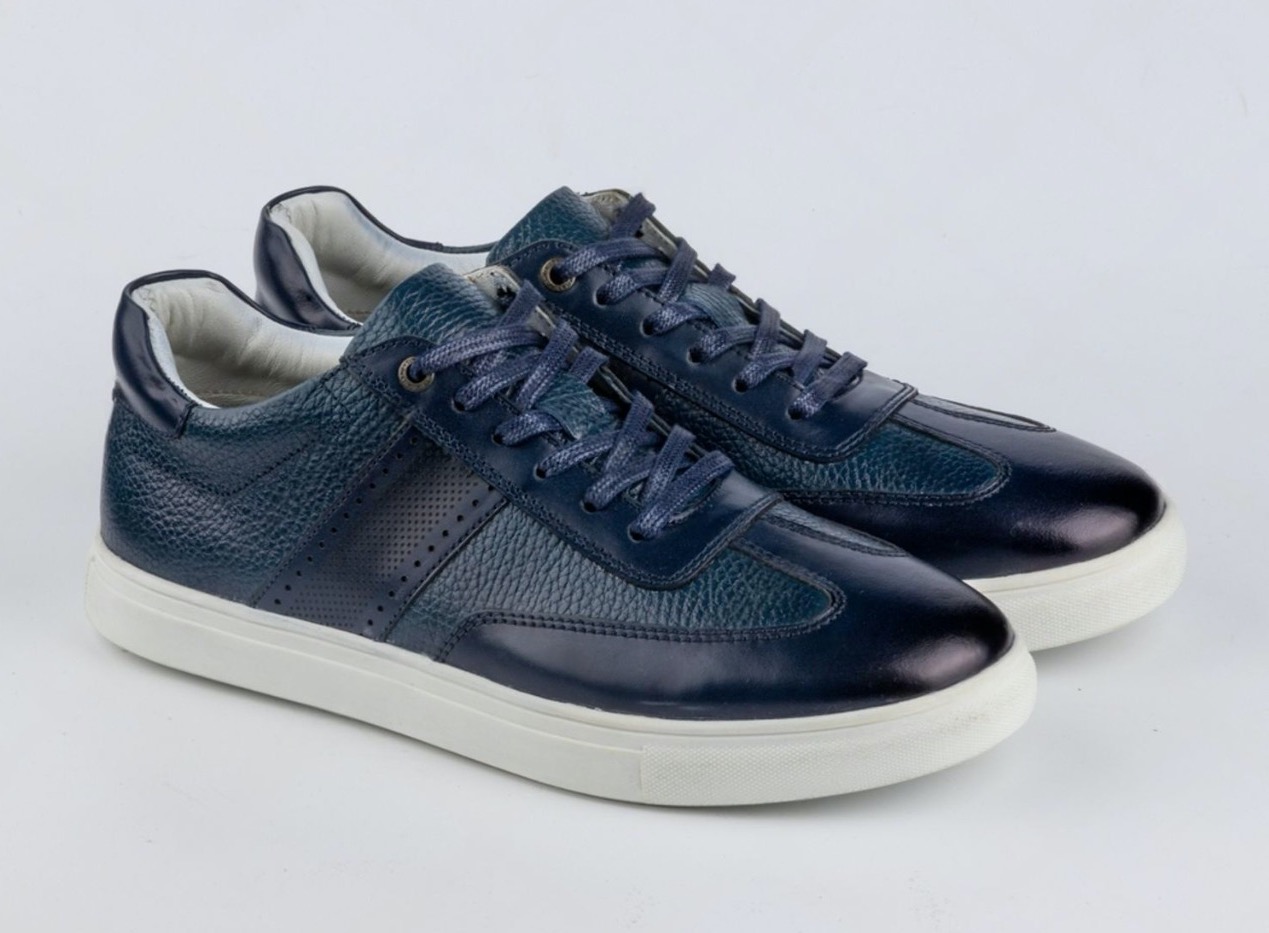
Introduction: The “Golden Sample Trap” in Global Sourcing
In the high-stakes world of global footwear sourcing, creating one perfect prototype is an act of craftsmanship. Replicating that perfection across 50,000 units of bulk production is an act of engineering.
For global brand directors and procurement officers, the “Golden Sample” (often referred to as the Confirmation Sample, Sealed Sample, or Pre-Production Sample) is the holy grail. It represents the binding contract between design intent and physical reality. It is the tangible promise that the shoe manufacturer makes to the buyer.
However, the transition from a controlled prototype environment to the chaotic reality of the factory floor is where most supply chains fail. This phenomenon is known as the “Golden Sample Trap.” It describes the nightmare scenario where the mass-produced goods slowly “drift” away from the approved standard—colors are slightly off, bond lines are visible, or the fit becomes inconsistent—leading to product returns, brand dilution, and significant financial loss.
At our factory, we have moved beyond simple visual comparison. We treat the Golden Sample not just as a physical shoe, but as a Master Standard defined by data, chemistry, and physics. We understand that quality cannot be “inspected” into a product at the end of the line; it must be “engineered” into the process from day one.
This guide explores how we use advanced methodologies from Statistical Process Control (SPC) to Digital Twins—to ensure your bulk order is a mirror image of your prototype.
The Strategic Imperative – Why the Golden Sample is Your Brand’s DNA
The Golden Sample is more than a reference tool; it is the physical embodiment of your brand’s integrity. When a consumer buys your product, they expect consistency. Whether they purchase a pair of safety boots in London or casual sneakers in Tokyo, the experience must be identical.
In our manufacturing facility, the Golden Sample serves three critical strategic functions that go beyond basic QC:
1. The Ultimate Arbiter of Quality
In the subjective world of fashion and design, opinions vary. “Is this red too bright?” “Is the leather too stiff?” The Golden Sample eliminates these subjective arguments. It provides an objective, signed-off benchmark. If the bulk production matches the Golden Sample, it meets the standard.
2. Risk Mitigation and Compliance
By locking in specifications early including material composition, chemical safety (REACH/Prop 65), and performance metrics. We prevent issues before mass production begins. The Golden Sample is the firewall that protects you from costly recalls.
3. Supply Chain Alignment
A shoe is an assembly of over 50 components. The Golden Sample aligns our entire supply chain. It tells the tannery exactly what shade of leather is required. It tells the outsole supplier exactly what hardness (Shore A) is needed. It unifies fragmented suppliers under one “Truth.”
Defining the “Match” – The Science of Attributes
How do we scientifically define a “match”? It isn’t a feeling. It is a set of quantified attributes. We break down the Golden Sample into measurable data points across four dimensions:
1. Physical Attributes (Dimensions & Tolerances)
We don’t just measure length and width. We use Geometric Dimensioning and Tolerancing (GD&T) to define critical fit points.
Lasting Dimensions: The volume of the shoe must match the approved Last. We measure the “ball girth” and “instep girth” with millimeter precision.
Sole Thickness: For PU injection shoes, the sole density and thickness determine comfort. We set tolerances (e.g., ±0.5mm) for heel height and forefoot thickness.
Weight: A variation in weight indicates a variation in material density. We weigh components to the gram.
2. Aesthetic Attributes (Color & Texture)
The human eye is subjective and influenced by lighting. We use technology to objectify aesthetics.
Color Consistency: We use spectrophotometers to measure color using the CIELAB color space. We typically require a $\Delta E$ < 1.0 for leather color matching against the Golden Sample. This ensures the difference is virtually imperceptible to the human eye.
Surface Finish: For microfiber or nubuck, we use gloss meters and tactile sensors to ensure the “hand feel” matches the prototype.
3. Functional Attributes (Performance)
The shoe must not just look like the sample; it must perform like it.
Bond Strength: We perform peel tests to ensure the outsole adhesion meets the approved value (e.g., >4.0 kg/cm for safety shoes).
Flex Resistance: The bulk materials must survive 50,000 cycles on a Ross Flex tester without cracking, matching the prototype’s lab report.
Waterproofing: If the Golden Sample is a waterproof hiking boot, every batch of bulk production undergoes dynamic water resistance testing.
4. Chemical Attributes (Safety)
For compliance, the bulk materials must match the chemical profile of the sample.
Restricted Substances: We verify that the bulk leather and glues are free from Phthalates, Chromium VI, and Azo dyes, adhering to the same safety standards as the tested Golden Sample.
The Challenge – Why Bulk Fails (Material & Process Drift)
If the Golden Sample is perfect, why does bulk production fail? The answer lies in the dynamic nature of manufacturing.
Material Variability
Raw materials are the enemy of consistency.
Natural Variance: Leather is a biological product. A hide from a cow in winter differs from one in summer. Batch A might absorb dye differently than Batch B.
Supplier Drift: A sub-supplier might slightly change the formula of the EVA foam to save costs, altering the compression set of the midsole.
Process Drift
Manufacturing processes are not static; they drift over time.
Machine Variables: Injection molding machines heat up over a shift. Cutting blades get dull.
Environmental Factors: High humidity can affect the curing time of water-based adhesives. A rainy week in Wenzhou can change how a cemented shoe bonds compared to a dry week.
Human Factor: A master technician makes the sample. A line worker makes the bulk. Without strict SOPs, the “hand” of the worker introduces variation.
Our Solution – The “Digital Golden Sample” & Predictive Control
To combat drift and ensure consistency, we have integrated Industry 4.0 technologies into our quality workflow. We are moving from “Quality Inspection” to “Quality Engineering.”
1. The Digital Golden Sample (Digital Twin)
Physical samples can fade, get lost, or degrade. We create a Digital Twin of your physical sample.
3D Scanning: We scan the approved shoe to create a high-fidelity 3D model that captures every curve and stitching line.
Spectral Data: We store the digital color DNA of the materials.
Digital BOM: A precise Bill of Materials linked to chemical formulations. This digital standard never fades and can be shared instantly with our QC teams and material suppliers.
2. Statistical Process Control (SPC)
We don’t just inspect the final shoe; we monitor the process parameters that create it. Using sensors on our DESMA-style injection machines, we track critical variables in real-time:
Injection Pressure
Mold Temperature
Curing Time
Glue Activation Temperature
The Benefit: If the mold temperature drifts by just 2°C, our system alerts the line manager before the sole becomes defective. We fix the process, preventing the defect from ever happening. This is Predictive Quality.
3. AI-Driven Visual Inspection
For critical aesthetic checks, we are piloting Automated Optical Inspection (AOI) systems. High-resolution cameras compare the bulk shoes on the conveyor belt against the Digital Golden Sample, instantly flagging any unit with a crooked logo or glue overflow.
Strategic Implementation – The “Golden Sample Protocol”
Technology is useless without a robust process. Here is the step-by-step SOP (Standard Operating Procedure) we follow for every order:
Step 1: The “Signature & Seal” (Locking the Spec)
Before we cut a single piece of leather, we require a Sealed Sample. We attach a “Golden Tag” that must be signed by your product developer and our production manager. This sample is locked in a humidity-controlled room and is never touched without gloves.
Step 2: The Pilot Run (Pre-Production Meeting)
We never jump straight into mass production. We run a Pilot Run of 30-50 pairs using bulk materials. We then hold a “PPM” (Pre-Production Meeting) where we compare the Pilot Run directly against the Golden Sample.
Is the toe shape identical?
Is the logo placement accurate? Only when the Pilot Run matches the Golden Sample 100% do we authorize the full production run.
Step 3: IQC (Incoming Quality Control)
We apply the Golden Sample standard to our suppliers. When leather or outsoles arrive, we check them against the “Limit Samples” (acceptable range of variation) derived from the Golden Sample. If materials don’t match, they don’t enter the warehouse.
Industry Nuances – Safety vs. Fashion
The application of the Golden Sample rule varies depending on the type of footwear we are manufacturing.
For Safety Footwear (Work Boots)
Focus: Functional Attributes.
Critical Match: Impact resistance of the toe cap, anti-penetration strength of the midsole, and slip resistance of the outsole.
Tolerance: Zero tolerance for safety failures. The bulk must meet or exceed the Golden Sample’s safety ratings.
For Fashion Footwear (Sneakers & Heels)
Focus: Aesthetic Attributes.
Critical Match: Color accuracy, stitching neatness, material texture, and finishing details.
Tolerance: Very tight tolerances for visual defects. A small glue stain that is acceptable on a work boot is a rejection on a luxury sneaker.
Frequently Asked Questions
Here are the top 10 questions we receive from clients regarding our Golden Sample and Quality Assurance processes.
Q1: What exactly is a “Golden Sample”?
A: It is the final, approved pre-production sample that serves as the benchmark for mass production. It represents the perfect standard for design, materials, and workmanship that the factory must replicate.
Q2: How do you handle color variation in natural leather?
A: We use “Limit Samples.” Alongside the Golden Sample (Target Color), we establish a “Light Limit” and a “Dark Limit.” Any leather falling outside this range is rejected during Incoming Quality Control (IQC).
Q3: Can I have a “Digital Golden Sample” for my own records?
A: Yes. We can provide 3D scans (.obj or .stl files) and spectral color data of your approved sample, allowing you to maintain a digital archive of your product specs.
Q4: Do you use AQL standards for inspection?
A: Yes. We typically inspect to AQL 2.5 (Major Defects) and AQL 4.0 (Minor Defects). This is the international industry standard. We are happy to work with stricter standards (AQL 1.0) upon request.
Q5: What happens if the bulk production doesn’t match the Golden Sample?
A: If a deviation is found during production (IPQC), we stop the line immediately to correct the process. If it is found during final inspection, we rework or reproduce the affected goods at our cost. We do not ship non-conforming goods.
Q6: Do you perform destructive testing on the bulk order?
A: Yes. We sacrifice a statistical sample (e.g., 1 pair per 1,000) from the bulk run to perform bond strength, hydrolysis, and flex testing to ensure functional consistency with the Golden Sample.
Q7: How do you ensure sub-suppliers (e.g., packaging) follow the Golden Sample?
A: We distribute “Duplicate Samples” or specific color swatches to all key sub-suppliers. We also perform onsite inspections at their facilities before they ship components to us.
Q8: Can I send a third-party inspector (SGS/Intertek) to check against the Golden Sample?
A: Absolutely. We encourage it. We provide your inspector with our “QC Copy” of the Golden Sample, a well-lit inspection room, and full cooperation.
Q9: How long do you keep the Golden Sample?
A: We keep the Sealed Sample for the duration of the production plus 6 months. For recurring orders, we refresh the Golden Sample annually to ensure it hasn’t degraded.
Q10: Does the Golden Sample include packaging?
A: Yes. The Golden Sample approval includes the shoe box, tissue paper, hangtags, and labels. We ensure the unboxing experience matches your approved design.
Conclusion & Practical Advice: Quality is Engineered
A beautiful sample proves capability. A beautiful bulk order proves reliability.
At our factory, we don’t rely on luck or last-minute inspections. We rely on data, standards, and process control. We engineer consistency into every step, ensuring that the shoe you receive in your warehouse is the shoe you approved in your showroom.
Buyer’s Checklist for Golden Sample Success
To ensure your next production run is flawless, follow these steps:
Sign and Seal: Always physically sign and date the approved sample. Attach a non-removable tag.
Define Tolerances: Don’t just say “match the sample.” Define how close the match must be (e.g., “Heel height ±1mm”).
Request “Limit Samples”: For color and texture, ask to see the acceptable range, not just the perfect target.
Digital Backup: Ask your factory if they can create a digital twin or spectral reading of the color to prevent fading issues over time.
Pilot Run Review: Always review the “First off the line” (Pilot Run) report before authorizing full mass production.
Ready to elevate your product quality?
Contact Our Team Today – Send us your Tech Pack, and let’s build a Golden Sample that sets the standard for your success.

 EN
EN  DE
DE  FR
FR  ES
ES  IT
IT  SV
SV  NB
NB  NL
NL  PL
PL  PT
PT  CS
CS  FA
FA  AR
AR  TR
TR  RU
RU  EL
EL  JA
JA  ID
ID  KO
KO