
Introduction: The “First Step” Effect and Your Bottom Line
In the hyper-competitive global footwear market, the upper sells the shoe, but the insole keeps it sold.
Consider the consumer’s journey: They see a stylish sneaker on the shelf or online. They like the design. They check the price. But the moment of truth—the “conversion event”—happens in the first 5 seconds of the try-on.
If the footbed feels hard, flat, or unforgiving, the customer hesitates. They worry about fatigue. They worry about blisters. However, if their foot sinks into a layer of plush, customized support that creates an immediate “Ahhh” sensation, the sale is practically made.
This is the power of Memory Foam.
For private label brands and startups, the choice of insole material—Standard EVA, Polyurethane (PU), or Memory Foam—is not just a technical detail; it is a critical strategic decision. It determines your price point, your return rate, and your brand’s reputation for quality.
While standard EVA has long been the industry default for budget footwear, shifting consumer expectations are driving a revolution. Shoppers now demand “walking-on-clouds” comfort, even at mid-market price points.
At Jinhua Shoes, we have helped dozens of emerging brands transform their product lines by upgrading this one hidden component. This guide draws on insights from material scientists, podiatrists, and manufacturing experts to help you navigate the trade-offs and choose the perfect foundation for your footwear brand.
The “Hidden” Component That Defines Brand Value
Why do some brands command $100 for a sneaker while others struggle to sell for $40? Often, the difference isn’t the leather or the stitching—it’s the Perceived Value generated by comfort.
The Psychology of Comfort
Modern consumers associate “softness” with “luxury.” When a customer presses their thumb into a shoe insole and sees it slowly rebound (the signature of memory foam), their brain registers the product as high-tech and premium. This tactile feedback allows brands to justify a higher markup.
Reducing Returns
For e-commerce brands, return rates are a profit killer. The #1 reason for footwear returns is “Fit and Comfort.” A rigid insole is unforgiving; if the shoe is slightly too big or the arch doesn’t match perfectly, the customer feels it. Memory foam insoles, by contrast, are adaptive. They fill the negative space between the foot and the shoe, correcting minor fit issues and reducing friction. By upgrading your insole, you are effectively buying an insurance policy against returns.
Material Showdown – EVA vs. Memory Foam vs. PU
To make the right choice for your collection, you need to understand the physics of the foam. Not all foams are created equal. Here is the honest, factory-level breakdown of the three titans of the insole industry.
1. EVA (Ethylene Vinyl Acetate) – The Budget Standard
EVA is the most common material found in mass-market footwear. It is a closed-cell foam filled with gas bubbles.
The Pros:
Lightweight: It adds almost no weight to the shoe.
Cost: It is the cheapest option available.
Flexibility: It bends easily with the foot.
The Cons:
Compression Set: This is the fatal flaw of EVA. Over time, the gas bubbles burst under the weight of the body. The insole “packs out” or flattens, losing its cushioning properties often within 3-6 months of daily wear.
Best For: Fast fashion sneakers, beach sandals, budget casuals where price is the only driver.
2. PU (Polyurethane) – The Performance Choice
PU is a denser, open-cell foam. It feels more like rubber than sponge.
The Pros:
Durability: PU does not compress like EVA. It retains 95% of its shape even after a year of wear.
Energy Return: It provides a “bouncy” feel that athletes love.
The Cons:
Weight: It is significantly heavier than EVA.
Initial Feel: It can feel “firm” rather than “plush” in the store, which might not give that instant “wow” factor to casual buyers.
Best For: Work boots, hiking shoes, high-mileage walking shoes.
3. Memory Foam (Viscoelastic PU) – The Comfort King
Memory foam is a specialized type of Polyurethane with added chemicals to increase its viscosity and density.
The Pros:
Custom Fit: It molds to the unique contours of the wearer’s foot using body heat and pressure.
Pressure Relief: It distributes body weight evenly, reducing pain in the ball of the foot and heel.
Marketing Appeal: The term “Memory Foam” is a powerful marketing keyword that consumers actively search for.
The Cons:
Heat Retention: Traditional memory foam can trap heat.
Lack of Support: A pure slab of memory foam can be too soft, lacking the structural integrity to support the arch.
Best For: Lifestyle sneakers, comfort flats, nurse shoes, casual boots, and any brand targeting “all-day comfort.”
The Memory Foam Myth – Addressing Heat and Support
Critics (and some podiatrists) argue that traditional memory foam has two flaws: it gets hot, and it “bottoms out” (compresses fully) under heavy weight, offering zero support.
At Jinhua Shoes, we don’t ignore these issues; we engineer around them. We offer a “Hybrid Comfort” solution that combines the best attributes of all materials.
Solution 1: Air-Cooled Technology
We utilize Open-Cell Memory Foam infused with cooling gel particles. Unlike the dense, closed-cell foam of the past (like mattress foam), our footwear-grade formulation allows air to circulate through the material with every step. We also add perforations in the forefoot and arch area. This “bellows effect” pumps hot air out and draws cool air in, keeping the foot dry and comfortable.
Solution 2: The Dual-Density Hybrid Construction
To solve the “bottoming out” issue, we never use memory foam alone. We create a laminated structure:
Layer A (Top): 3mm – 5mm of High-Density Memory Foam. This provides the plush, “walking on clouds” sensation and molds to the foot shape.
Layer B (Base): A molded base of High-Rebound PU or Firm EVA. This creates a deep heel cup and a structured arch support that stabilizes the foot.
This hybrid approach satisfies the customer’s desire for softness and the podiatrist’s requirement for biomechanical support.
The ROI of Comfort – A Business Case
Many startup brands hesitate to upgrade their insoles because of the unit cost. Let’s look at the math to see why this is a mistake.
The Cost Breakdown:
Standard Die-Cut EVA Insole: ~$0.25 – $0.35 per pair.
Premium Memory Foam Hybrid Insole: ~$1.00 – $1.50 per pair.
The Investment: You are spending approximately $1.00 extra per pair.
The Return:
Retail Price Increase: That 10.00 to $20.00 for this feature. That is a 10x to 20x return on investment.
Conversion Rate: “Comfort” is the #1 filter on shoe shopping sites. Adding “Memory Foam” to your product title increases click-through and conversion rates.
Customer Lifetime Value (CLV): A customer who buys a comfortable shoe comes back. A customer who buys a hard shoe (even if it was cheap) never returns.
Customization – Branding Your Comfort
We don’t just stuff a generic foam pad into your shoe. As a private label manufacturer, we treat the insole as a prime branding real estate. Here is how we customize it for you:
1. Visual Branding
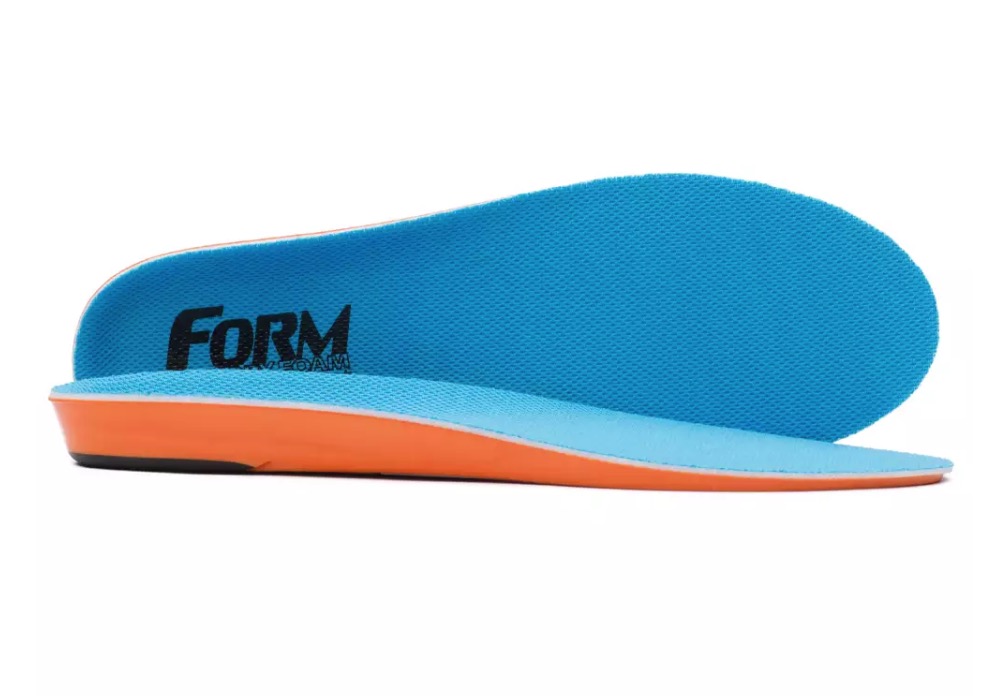
Heel Logo: We can heat-transfer or screen-print your logo on the heel.
Woven Labels: For a luxury touch, we can sew a woven label onto the top cloth.
Color Blocking: We can dye the foam in your brand colors (e.g., a bright orange foam layer visible from the side profile).
2. Functional Fabrics (Top Cloth)
The fabric touching the foot matters.
BK Mesh: Breathable and sporty. Best for sneakers.
Microfiber/Suede: Luxurious and non-slip. Best for dress shoes and heels.
Antimicrobial Fabric: Treated with silver ions to prevent odor. Essential for work boots and summer shoes.
Manufacturing Reality – MOQs and Integration
How do you actually get these insoles into your shoes?
If you are manufacturing shoes with us: The process is seamless. We adjust the shoe last (the mold) to account for the extra thickness of the memory foam so the shoe doesn’t feel tight. The MOQ follows the shoe order (e.g., 300-500 pairs).
If you want to buy insoles separately: Perhaps you have existing inventory that needs an upgrade. We can manufacture standalone insoles packaged for retail.
MOQ: Typically 1,000 pairs.
Packaging: We can provide custom blister packs or boxes for retail display.
Frequently Asked Questions
Here are the top 10 questions brand owners ask us about upgrading to memory foam.
1. Q: Does memory foam lose its “bounce” over time?
A: Cheap, low-density foam does. We use High-Density (50D-60D) PU Memory Foam that passes rigorous compression set testing. It is tested to retain 95% of its thickness and rebound capability even after 6 months of daily heavy wear.
2. Q: Can I put memory foam in any type of shoe?
A: Yes, but thickness matters. For sneakers and boots, we use 4mm-6mm foam. For slim shoes like ballet flats or pumps, we use a specialized 3mm high-density foam to provide cushion without making the shoe too tight.
3. Q: Is memory foam good for plantar fasciitis?
A: On its own, no. But our Hybrid Insole (Memory Foam Top + Rigid Arch Support Base) is excellent for plantar fasciitis because it provides both the cushioning to relieve heel pain and the structural support to stabilize the arch.
4. Q: Will memory foam make my feet sweat?
A: Not if you use the right type. Our Air-Cooled Open-Cell Foam combined with moisture-wicking top fabrics (like bamboo charcoal or cool-max mesh) actively manages temperature and moisture.
5. Q: Can I wash memory foam insoles?
A: Yes, they are generally hand-washable. We recommend using mild soap and air drying. Machine washing can damage the structure if the cycle is too hot or rough.
6. Q: What is the difference between “Molded” and “Die-Cut” insoles?
A: Die-Cut is like using a cookie cutter on a flat sheet of foam (cheaper, flat). Molded involves injecting foam into a 3D mold to create curves, heel cups, and arch support (premium, ergonomic). We recommend Molded for private label brands.
7. Q: Can I customize the arch height?
A: Yes. With a molded insole, we can adjust the mold to create Low, Medium, or High arch support profiles depending on your target demographic.
8. Q: Is OrthoLite® the same as Memory Foam?
A: No. OrthoLite® is a brand of open-cell PU foam known for breathability and durability. It is excellent, but it has a different “feel” than memory foam. We offer both options depending on whether you want “bouncy” (OrthoLite style) or “molding” (Memory Foam style).
9. Q: How much does a custom logo mold cost for insoles?
A: If you want your logo embossed into the foam, there is a small mold fee (approx. $500). If you just want it printed on the fabric, there is usually no mold fee, just a small setup charge.
10. Q: Can you make eco-friendly memory foam?
A: Yes. We offer Bio-Based Memory Foam which replaces a portion of the petroleum-based polyols with plant-based oils (like castor oil). We also use recycled polyester for the top cloth.
Conclusion: Don’t Let a Cheap Insole Kill Your Sale
In the footwear business, your customer might buy the shoe for the design, but they will wear it (and recommend it) for the comfort.
A cheap, paper-thin EVA insole is a false economy. It saves you cents but costs you loyalty. By upgrading to a high-quality Memory Foam Hybrid Insole, you are investing in the most important feature of your product: how it feels.
Are you ready to upgrade your brand’s comfort rating?
Practical Checklist for Buyers
The “Thumb Test”: When you receive samples, press your thumb hard into the heel. It should leave an impression that slowly fades (2-3 seconds). If it snaps back instantly, it’s not real memory foam.
Check the Allowance: Memory foam needs volume. Ensure your factory adjusts the Lasting Allowance (internal space) of the shoe so the thicker insole doesn’t crush the toes.
Market the Tech: Don’t hide the upgrade. Use terms like “Custom Fit,” “Pressure Relief,” and “Air-Cooled” on your hangtags and product descriptions. These are high-converting keywords.
Contact Our Team Today – Contact Jinhua Shoes today. We will send you our Air-Cooled Memory Foam and Hybrid Insole samples so you can feel the difference yourself.

 EN
EN  DE
DE  FR
FR  ES
ES  IT
IT  SV
SV  NB
NB  NL
NL  PL
PL  PT
PT  CS
CS  FA
FA  AR
AR  TR
TR  RU
RU  EL
EL  JA
JA  ID
ID  KO
KO