
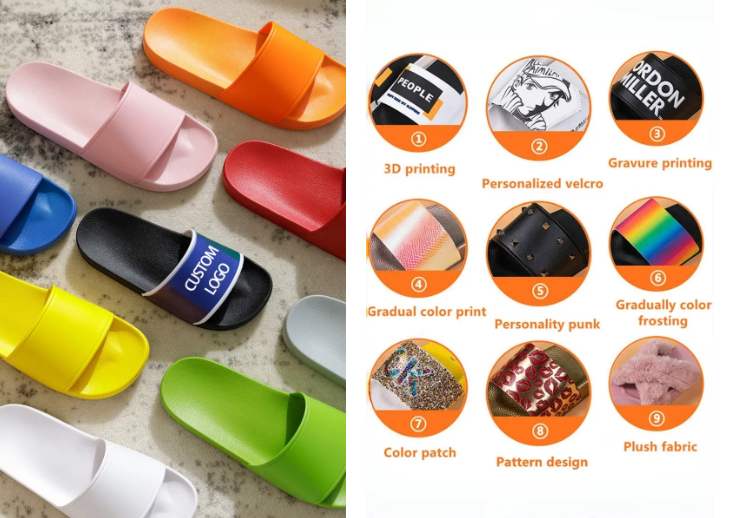
If you are a brand founder or a procurement manager for a hotel chain, you know that the “little things” often make the biggest impact. Custom slippers are no longer just a basic amenity. They have become a powerful branding tool. Whether they are sitting in a five-star hotel suite or being sold as limited-edition merchandise for a streetwear label, slippers carry your logo into the most private spaces of your customers’ lives.
But here is the problem. Many brands settle for cheap, printed logos that peel off after two wears. If you want your brand to feel premium, you need to look at logo embroidery. At Jinhua Shoes, based right here in the heart of Wenzhou, we help global clients navigate the technical side of footwear manufacturing. We don’t just “make shoes.” We help you engineer a product that balances cost, quality, and brand identity. This guide will walk you through everything you need to know about custom slippers for brands, focusing on the embroidery options that will set your products apart.
Why Logo Embroidery is the Gold Standard for Branded Slippers
Let’s be honest. Screen printing is fast and cheap. But for slippers—especially plush or waffle-weave styles—printing often looks “tacked on.” The ink sits on top of the fibers and eventually cracks. Embroidery, on the other hand, is stitched into the fabric. It becomes part of the slipper.
Embroidery offers a textured, high-end feel that printing simply cannot match. It suggests durability and attention to detail. When a guest at a resort sees a crisp, embroidered logo on their slippers, they perceive the brand as more valuable. Also, from a manufacturing standpoint, embroidery thread is incredibly resilient. It handles washing and daily friction much better than heat-transfer vinyl or silk-screen ink. If you are looking to build long-term brand loyalty, embroidery is the way to go.
Exploring Logo Embroidery Options for Your Brand
Not all embroidery is the same. Depending on your logo’s complexity and your brand’s “vibe,” you have several technical paths to choose from.
Flat Embroidery: The Clean, Professional Look
This is the most common choice for branded custom slippers. The thread is stitched flat against the upper material. It is perfect for text-based logos or simple icons. We use high-speed Tajima machines that can handle intricate details with zero “thread nesting.” If your brand identity is minimalist and professional—think corporate gifting or high-end spas—flat embroidery is your best bet. It is cost-effective and looks sharp on almost any material, from cotton velour to polyester plush.
3D Puff Embroidery: Adding Premium Dimension
If you want your logo to literally “pop,” you should consider 3D puff embroidery. We place a thin layer of foam under the stitching, which raises the logo off the surface of the slipper. This creates a bold, three-dimensional effect. It is very popular with streetwear brands and lifestyle labels. But keep in mind, 3D embroidery works best with simple, bold shapes. If your logo has very fine lines or small text, the foam can make it look messy. (And nobody wants a blurry logo).
Embroidered Patches: Flexibility for Complex Designs
Sometimes a logo is just too complex for direct embroidery. Maybe it has twelve different colors or very fine gradients. In this case, we create a separate embroidered patch and then sew it onto the slipper vamp. This allows for much higher detail. Also, it gives you the option to use different textures—like a twill background for the patch—which adds another layer of design depth. It’s a great way to handle wholesale custom slippers for events where the branding needs to be loud and detailed.
Beyond the Logo: Customizing Materials and Functions
A great logo needs a great canvas. When you are sourcing from a China shoe manufacturer, you need to understand the “menu” of materials available to you.
Selecting the Right Upper: From Plush Fleece to Breathable Mesh
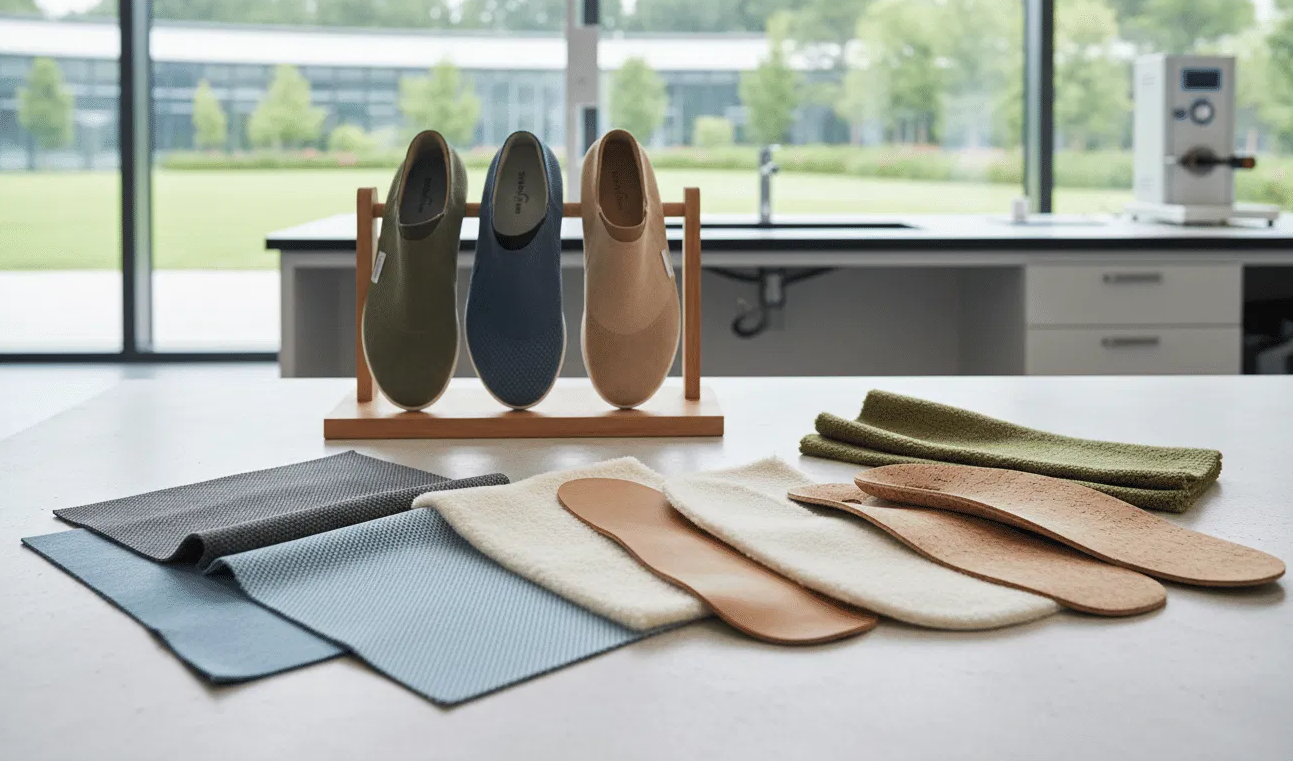
The upper material dictates the comfort level. For winter collections or luxury hotels, we usually recommend coral fleece or heavy-weight plush. These materials hold embroidery beautifully because the thick pile hides the “tie-off” stitches. But if you are designing for a summer resort or a gym, you might want a breathable sandwich mesh or a classic waffle weave. How to choose slipper materials really depends on the climate of your target market. (You don’t want to sell heavy fur slippers in Miami in July).
Sole Engineering: EVA, PVC, and Anti-Slip Technology
The sole is where the “function” happens. Most of our B2B clients choose EVA (Ethylene-Vinyl Acetate) because it is lightweight and provides good cushioning. It is also easy to emboss your logo onto the bottom of an EVA sole. PVC is another option—it is more durable and offers better grip on wet surfaces, making it ideal for bathroom or spa slippers. We also offer anti-slip “dot” soles for disposable hotel slippers. By choosing the right sole, you can actually reduce your production costs by 10% to 15% if you match the material to the intended use correctly.
The B2B Sourcing Reality: MOQs, Lead Times, and Costs
Let’s talk business. Sourcing from Wenzhou gives you a massive advantage in terms of supply chain speed. At Jinhua Shoes, we can often complete sampling in just 3 to 5 days. But you need to be realistic about MOQs (Minimum Order Quantities).
For a fully custom, “deep” customization order—where we dye the fabric to your specific Pantone color and create custom molds—the MOQ is usually around 1,000 pairs. However, we know that many startup brands need to move faster. For “light customization,” where we use stock materials but add your custom embroidery, we can often support orders as low as 300 to 500 pairs. This allows you to test the market without tying up all your capital in inventory.
Why Wenzhou is Your Strategic Partner for Custom Footwear
Wenzhou is known as the “Shoe Capital of China” for a reason. Within a 20-mile radius of our factory, we have access to every thread supplier, sole manufacturer, and packaging house imaginable. This “cluster effect” means we can solve problems faster than factories in other regions. If a specific embroidery thread color is out of stock, I can usually have a replacement on my desk in two hours. This efficiency is passed directly to you in the form of faster lead times and more competitive pricing. When you work with us, you aren’t just buying a product; you are tapping into the world’s most efficient footwear ecosystem.
FAQ: Common Questions from B2B Buyers
1. What is the best file format for my logo embroidery?
We always prefer vector files, such as .AI (Adobe Illustrator) or .EPS. These allow our digitizers to map out every stitch perfectly. If you only have a high-res .PNG, we can work with it, but it might take an extra day for the conversion.
2. Can I embroider on the side of the slipper instead of the top?
Yes, but it depends on the style. For “open-back” slides, the top (vamp) is the best spot. For “closed-back” or bootie-style slippers, side embroidery looks great and adds a unique touch.
3. How do you ensure the embroidery doesn’t itch the wearer’s foot?
This is a great question. We always apply a soft “backing” fabric over the inside of the embroidery. This covers the messy threads and ensures the inside of the slipper remains smooth and comfortable against the skin.
4. Can you match my brand’s specific Pantone colors for the thread?
Absolutely. We use the Pantone Matching System (PMS) to select our embroidery threads. We have thousands of thread colors in stock to ensure your brand consistency is 100% accurate.
5. What is the difference between embroidery and woven labels?
Embroidery is stitched directly into the slipper. A woven label is a small fabric tag (like the one on the side of a pair of Levi’s) that is sewn into a seam. Woven labels are great for subtle branding or for adding “Made in China” or size information.
6. Do you offer eco-friendly material options for custom slippers?
Yes. We are seeing a huge demand for recycled PET fabrics and organic cotton. We can also use recycled EVA for the soles. Sustainability is a big part of our 2026 production roadmap.
7. How long does mass production take after the sample is approved?
For standard orders, mass production usually takes 15 to 25 days. If you have a very large order (over 10,000 pairs), we will provide a staggered delivery schedule to keep your supply chain moving.
8. Can I get a sample before I commit to a bulk order?
Of course. We actually insist on it. We want you to feel the material and see the embroidery quality before we start the machines for a full run.
9. Are your slippers machine washable?
Most of our plush and cotton slippers are machine washable on a gentle cycle. However, we always recommend air drying to maintain the shape of the EVA sole.
10. How do you handle quality control for large orders?
We have a dedicated QC team that inspects the slippers at three stages: after the embroidery is finished, during the lasting process, and a final 100% inspection before packing. We catch the “unqualified” products on the spot so they never reach your warehouse.
Conclusion
In the competitive world of branded merchandise, quality is your best marketing strategy. Custom slippers with professional logo embroidery offer a level of luxury and durability that printing simply cannot match. Whether you are looking to upgrade your hotel amenities or launch a new retail line, choosing the right embroidery option and the right manufacturing partner is the key to your success.
At Jinhua Shoes, we combine Wenzhou’s manufacturing power with a deep understanding of global brand standards. We don’t just want to be your supplier; we want to be your strategic partner in China.
Ready to see your logo on a premium pair of slippers? Contact our team today. We will provide a free design mockup and a wholesale quotation within 12 hours. Let’s build something comfortable together.
📧 Email us at: sales@jinhuashoes.com (Or send us a message via WhatsApp at +86-15157761712)
 EN
EN  DE
DE  FR
FR  ES
ES  IT
IT  SV
SV  NB
NB  NL
NL  PL
PL  PT
PT  CS
CS  FA
FA  AR
AR  TR
TR  RU
RU  EL
EL  JA
JA  ID
ID  KO
KO