
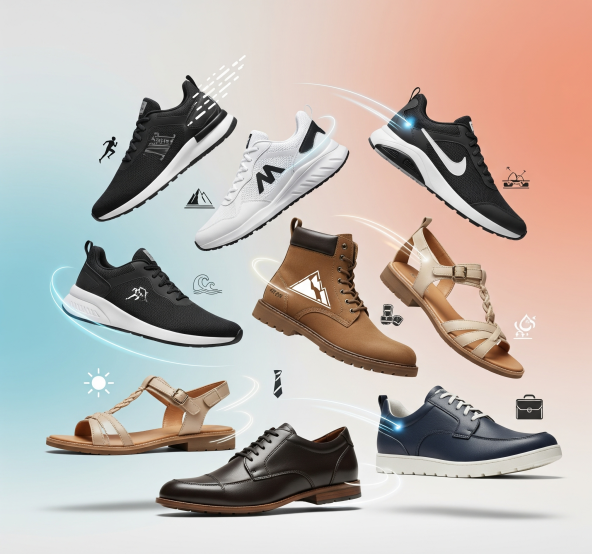
If you are a footwear brand owner or a procurement director in 2026, you know that the FOB price we quote at our Wenzhou factory is just the start of the story. The real number that determines your profit is the landed cost. In today’s trade world, misclassifying a single pair of sneakers can lead to a 48% duty hit in the US or a customs seizure in the EU.
Trade policy has become a favorite tool for governments. Between the US crackdown on low-value shipments and the EU’s new anti-deforestation laws (EUDR), importing shoes is now a high-stakes game. At Jinhua Shoes, we don’t just make your designs. We act as your strategic partner to make sure those designs don’t get buried under unnecessary taxes. This guide breaks down the 2026 tariff landscape and shows you where the savings are hidden.
Why Landed Cost is the Only Number That Matters in 2026
Let’s be honest. A great design gets you in the door, but a smart tax strategy keeps you in business. In 2026, tariffs are no longer a fixed cost. They are a variable you can control. With global inflation and rising material costs, a 5% or 10% difference in duty rates can be the difference between a successful launch and a total loss.
We see many brands treat customs duties as an afterthought. They wait until the container is at the port to think about taxes. By then, it is too late. You need to practice tariff engineering during the design phase. This means looking at the shoe as a collection of materials that customs officers will tax differently.
Mastering HS Codes: The Difference Between 10% and 48% Duty
Everything in footwear trade starts with Chapter 64 of the Harmonized System (HS). But a shoe is never just a “shoe” to a customs officer. It is a mix of rubber, plastic, leather, and textile. The percentage of these materials determines your tax bracket.
Material Engineering: How a 1% Change Saves Thousands
The most common codes we handle are 6402 (rubber/plastic uppers), 6403 (leather uppers), and 6404 (textile uppers). The details are where the money is. For example, if your sneaker has a textile upper but the “Surface Area of the Upper” (SVP) is more than 50% leather, it jumps to 6403.
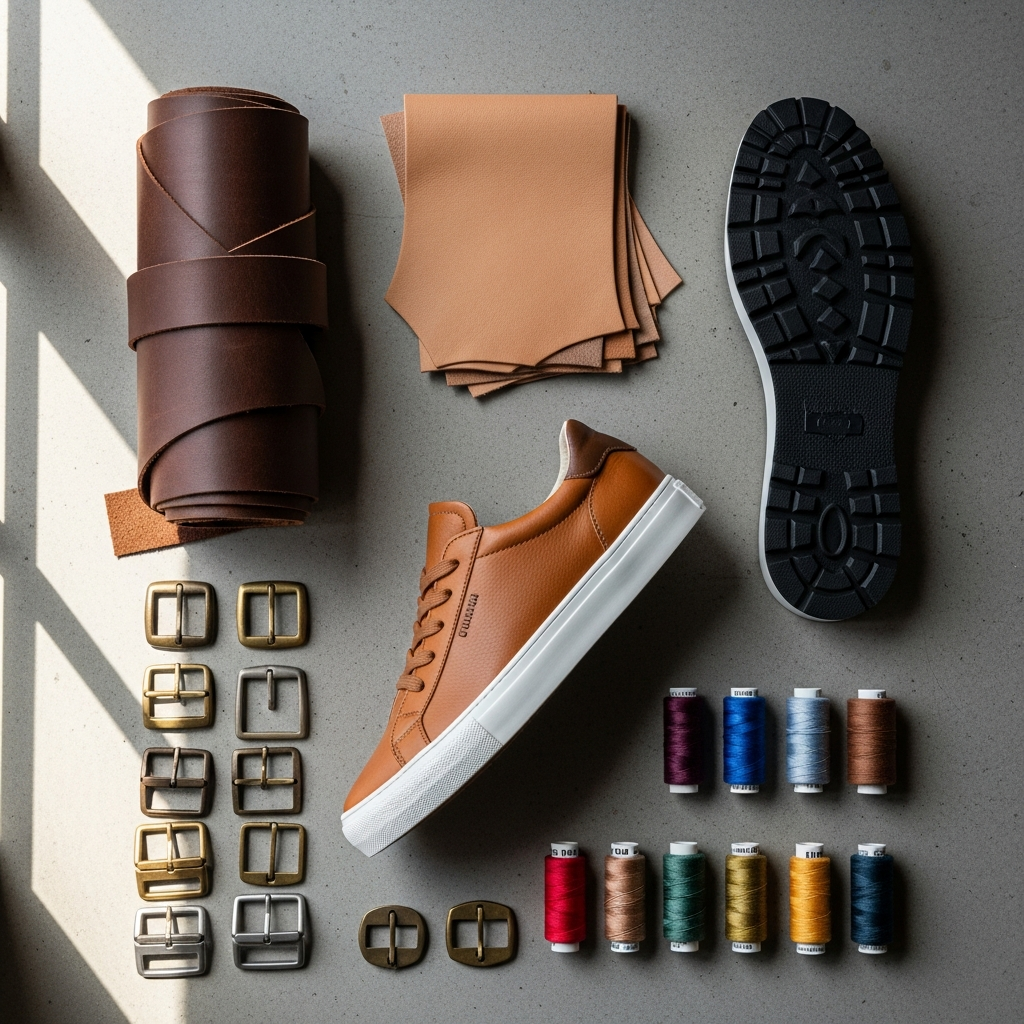
In the US, this shift can change your duty from a manageable rate to a much higher one. We often work with clients to adjust a logo size or a leather overlay by just a few millimeters. This small change can hit a more favorable HS code and save you thousands of dollars on a single order. (And believe me, we have seen it happen many times).
Common Classification Mistakes to Avoid
One big mistake is the “misclassification of waterproof footwear.” Many buyers think that if a boot is waterproof, it gets a lower rate. But if the waterproof barrier is a hidden membrane instead of a rubber exterior, the classification changes. Another pitfall is “Sports Footwear” vs. “Casual Footwear.” US Customs has very specific definitions for what makes a “tennis shoe.” If your tech pack doesn’t match these definitions, you could get a massive bill for back-duties.
US Market Updates: Section 301 and the End of the De Minimis Loophole
For our US-based clients, 2026 has brought big changes. First, the Section 301 tariffs on Chinese-made footwear are still here. These add duties from 7.5% to 25% on top of base rates. But the bigger story is the crackdown on the $800 “De Minimis” loophole (Section 321).
In the past, many e-commerce brands avoided duties by shipping individual pairs directly to customers. In 2026, new rules and “entry fees” for these shipments mean that bulk sea freight is once again the best way to move goods. If you were relying on small air shipments to save on taxes, you need to rethink your strategy now.
Managing the “Last Sale” Valuation Shift
The US has also moved toward Last Sale Valuation. This means duties are calculated on the final price paid before the goods enter the US. In the past, some importers used the “First Sale” rule to pay duties on the factory’s price. This is now much harder to do. You need a very transparent and audited supply chain to make this work in 2026.
EU Market Updates: Sustainability as a New Trade Barrier
The European Union has taken a different path. Their base duties are usually between 3% and 17%. But they have added “non-tariff barriers” that act like taxes.
By December 30, 2026, all importers must follow the EUDR (EU Deforestation Regulation). If your shoes use leather or natural rubber, you must prove the materials did not come from deforested land. If you can’t prove it, your goods won’t just be taxed—they will be rejected.
EUDR Compliance and the Digital Product Passport (DPP)
Customs officers in Europe are now scanning QR codes to see the “Environmental Score” of the shoe. This is the Digital Product Passport (DPP). At Jinhua Shoes, we provide the full data sets required for the DPP. We make sure your sustainability credentials are as solid as your HS codes. We also stay updated on the GSP+ status of different regions to help you decide where to ship from.
4 Practical Strategies to Cut Your Import Duties Legally
How do you actually lower your bill? Here are four strategies we use with our top B2B clients:
Tariff Engineering: As mentioned, we can adjust the percentage of leather vs. textile in your design to hit a lower tax bracket.
Functional Stitching: Sometimes, adding or removing specific stitching can change a shoe’s classification from “casual” to “work/safety,” which might have a lower duty rate.
Accurate Valuation: We make sure your invoices are 100% accurate but optimized. For example, separating the cost of “reusable molds” from the “unit price” can sometimes lower the dutiable value.
Utilizing FTZs: For US buyers, we recommend using Foreign Trade Zones. This lets you store your inventory and only pay the duty when the shoes leave the warehouse for the retail shelf. This is great for your cash flow.
Frequently Asked Questions (FAQ)
1. What is the highest duty rate for shoes in the US in 2026?
Certain cheap sneakers with textile uppers can hit a peak rate of 48% plus Section 301 surcharges. This is why material selection is so important.
2. Does the EU require a Digital Product Passport for every shipment?
Yes, by 2026, the DPP is becoming the standard. It is a digital record of the shoe’s materials and origin. We provide this data as part of our service.
3. Can I save money by shipping “unassembled” shoes?
Sometimes. Shipping uppers and soles separately to be assembled in a local FTZ can occasionally result in lower duties. But the labor cost of local assembly usually outweighs the savings unless your volume is huge.
4. What is the HS code for leather sneakers?
Usually 6403.99. But if the “leather” is actually a synthetic PU, it moves to 6402.99. The duty difference can be 10% or more.
5. How does the EUDR affect my leather shoe order?
You must have geolocation data for the farm where the cattle were raised. We work with certified tanneries that provide this paperwork to ensure your EU imports are safe.
6. Is the “First Sale” rule completely dead in the US?
Not completely, but the 2026 “Last Sale” shift has made it much harder. You need a very transparent and audited supply chain to try it now.
7. What is the difference between an HS code and a CN code?
The HS code is the global 6-digit standard. The CN (Combined Nomenclature) is the EU’s specific 8-digit extension used to find the exact duty rate.
8. Are safety boots taxed differently than fashion boots?
Yes. Safety boots with metal toe-caps often have different rates and may be exempt from certain “fashion” surcharges.
9. How can I verify my HS code before shipping?
We recommend a “Binding Ruling” from customs. We provide the technical material breakdown that your broker needs to apply for this ruling.
10. Does Jinhua Shoes help with customs paperwork?
Absolutely. We coordinate with your freight forwarder and provide all necessary documents, including the new 2026 sustainability declarations.
Conclusion
In the footwear business, a great design gets you in the door, but a smart tax strategy keeps you in business. Navigating the maze of US and EU footwear tariffs in 2026 requires a manufacturer that understands the intersection of design, material science, and international trade law.
At Jinhua Shoes, we pride ourselves on being that partner. We don’t just want to make your shoes. We want to make sure your business is profitable. By optimizing your HS codes and material composition during the sampling phase, we can help you save thousands of dollars in unnecessary duties.
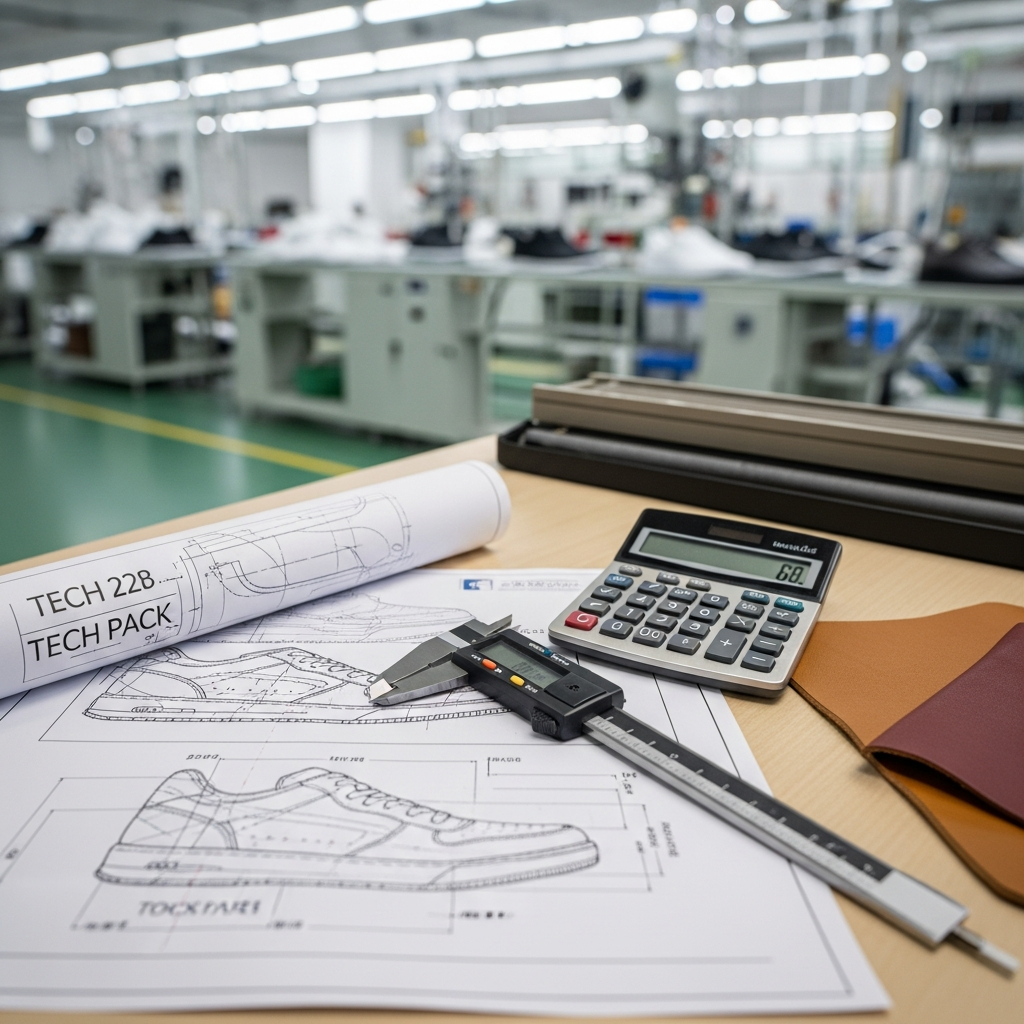
Ready to optimize your landed costs? Contact our trade consulting team today. We can review your current tech packs and provide a “Duty Impact Analysis” to see where you can save.
📧 Email us at: sales@jinhuashoes.com (Get expert feedback on your import strategy within 12 hours.)
 EN
EN  DE
DE  FR
FR  ES
ES  IT
IT  SV
SV  NB
NB  NL
NL  PL
PL  PT
PT  CS
CS  FA
FA  AR
AR  TR
TR  RU
RU  EL
EL  JA
JA  ID
ID  KO
KO