
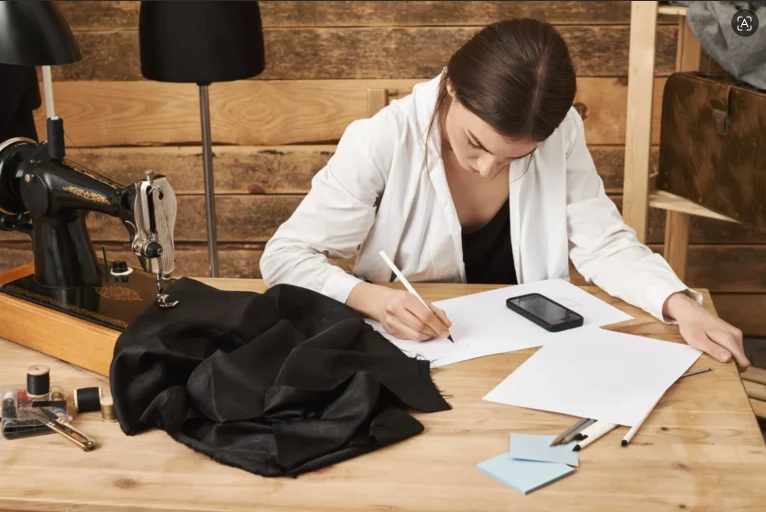
We see it happen every single week. A passionate brand founder or designer sends us a beautiful, full-color sketch of a sneaker or a boot. They wait 30 days, pay the sample fee, and open the box when it arrives. But instead of their dream shoe, they get something that looks completely wrong. The proportions are off, the materials feel cheap, and the colors clash.
Who is to blame? Usually, it is not the factory. It is the Tech Pack.
If you want to manufacture custom footwear in China, you need to understand a harsh truth: a beautiful sketch is not a manufacturing instruction. Chinese shoe factories do not guess. If you leave a detail blank, the sample room manager will fill in the blank with whatever material is cheapest or closest to their workbench.
After 20 years of OEM and ODM manufacturing, we know exactly where the communication breaks down. Today, we are going to show you how to build a Footwear Tech Pack that leaves zero room for error. We will break down the exact specifications our sample room needs to get your shoe right on the first try. Also, we have included a free, factory-approved 2026 Tech Pack template at the end of this guide to save you hours of formatting.
The “Pretty Picture” Problem: Why Most Tech Packs Fail
Many startup brands hire talented freelance designers. These designers create stunning 3D renders or Illustrator files. But they often lack actual factory floor experience.
They send a PDF filled with long paragraphs of English text explaining the “vibe” or “inspiration” of the shoe. Here is the thing: the pattern maker on the factory floor in Wenzhou or Dongguan does not care about your brand’s inspiration. They might not even read English fluently. They are engineers. They need numbers, measurements, and clear visual callouts.
When a tech pack relies on text instead of visual arrows and standardized codes, translation errors happen. “Navy Blue” might translate to a bright royal blue. “Soft leather” might result in a flimsy sheepskin when you actually needed a milled cowhide. A good tech pack bridges this language and cultural gap through universal manufacturing standards.
What Exactly is a Footwear Tech Pack?
A Tech Pack (Technical Package) is the ultimate blueprint for your shoe. It is a binding document that tells the custom shoe manufacturer exactly how to build your product.
Think of it like an architectural blueprint for a house. You wouldn’t hand a builder a watercolor painting of a house and say, “Build this.” You give them floor plans, material lists, and electrical layouts. Your tech pack does the same thing for your footwear supply chain. It protects your brand, ensures accurate pricing, and serves as your quality control checklist when mass production finishes.
The 5 Non-Negotiable Elements of a Perfect Tech Pack
If you want to cut your sampling time in half and avoid paying for endless revisions, your tech pack must include these five sections.
1. Detailed Technical Drawings (The Multi-Angle Rule)
One side profile is never enough. Your tech pack must include flat, 2D vector line art (usually done in Adobe Illustrator) showing every angle of the shoe:
Lateral side (outside)
Medial side (inside)
Top view (vamp and tongue)
Heel view (back)
Outsole view (bottom tread pattern)
More importantly, you need to use arrows to point out the stitching details. Do you want a single stitch or a double row? What is the distance between the stitches? If you don’t specify, the factory will use their default setting.
2. The Bill of Materials (BOM) – Precision is Profit
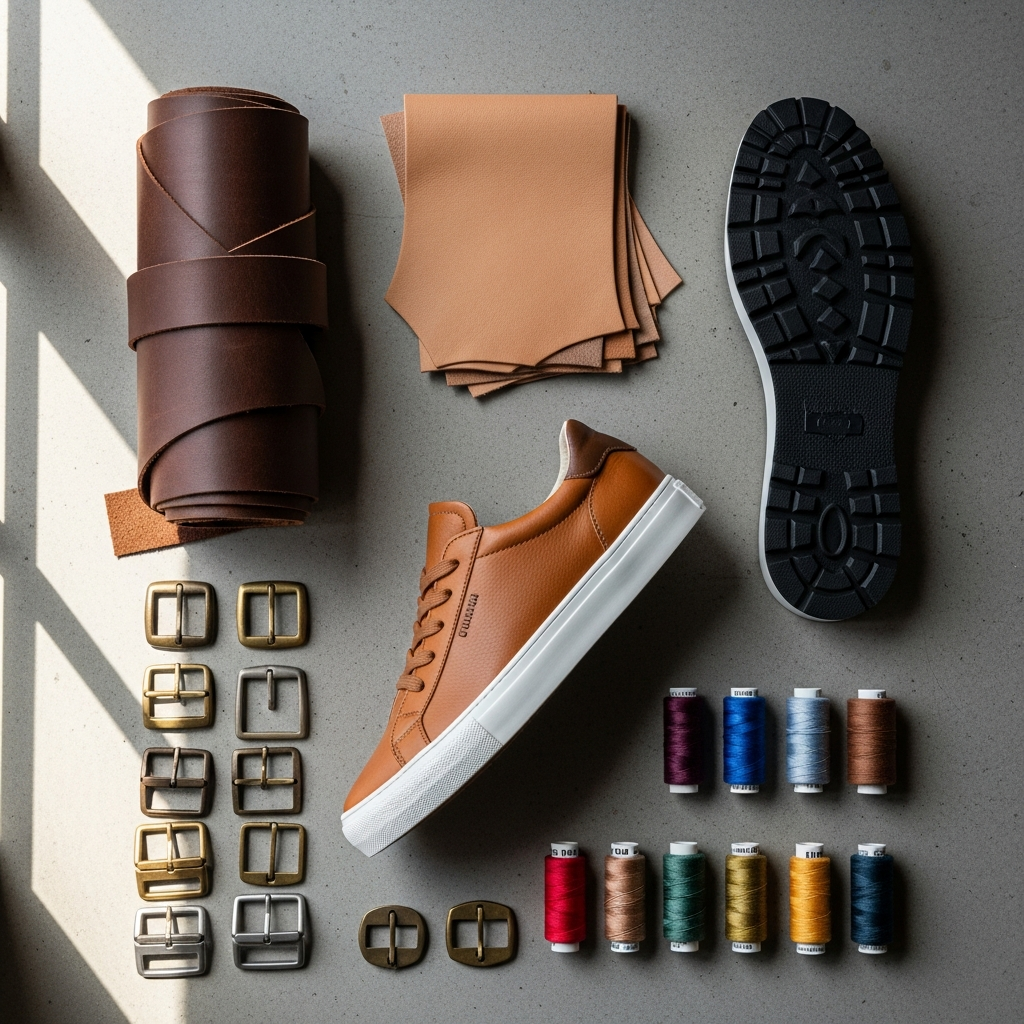
The BOM is the heart of your tech pack. It is a table that lists every single component of the shoe. Never just write “Leather.” You must be specific.
For example, instead of “Leather upper,” write: 1.2mm thickness, full-grain tumbled cowhide. Instead of “Laces,” write: 8mm flat cotton laces with plastic aglets, 120cm length.
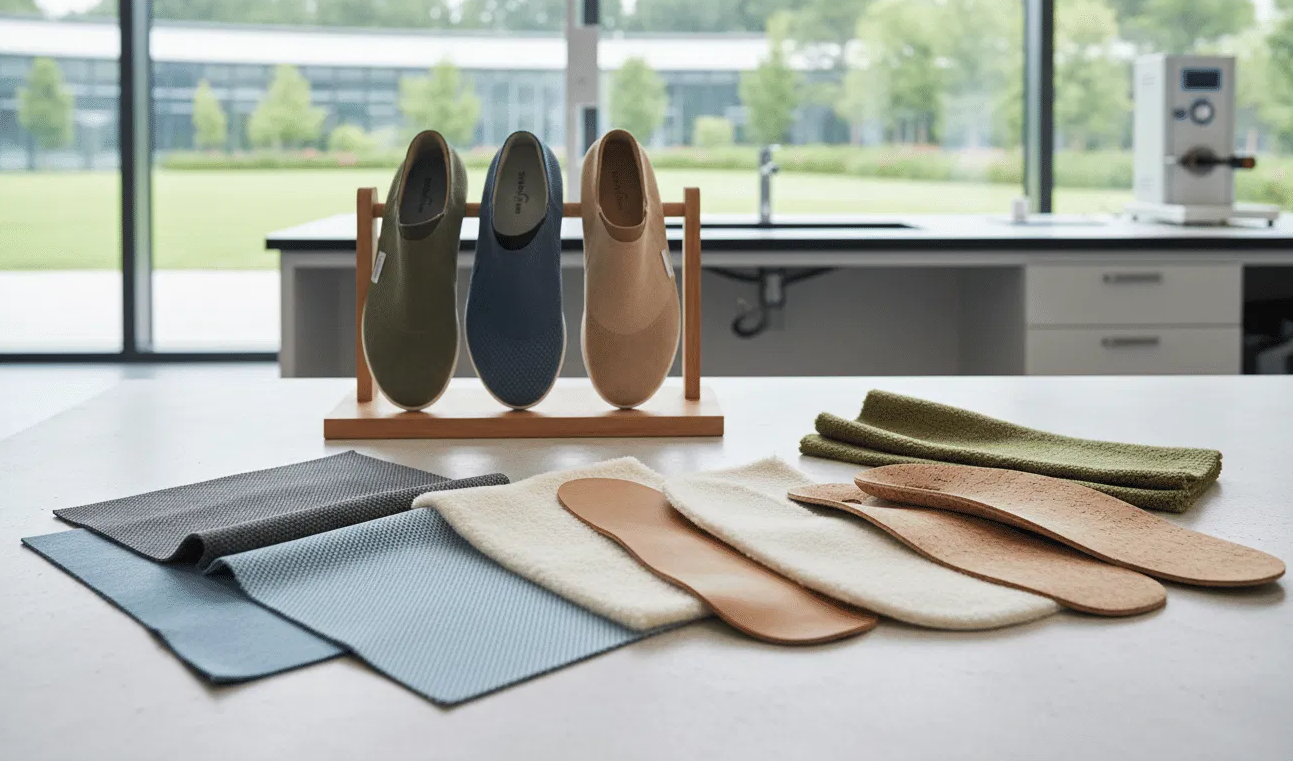
If you have physical material swatches, take clear photos of them and attach them to the BOM. The more specific you are, the more accurate your initial price quote will be.
3. Colorways & Pantone References
Colors look different on every computer monitor. If you send a PDF with a blue shoe, it will look different on your Mac than it does on the factory manager’s PC.
You must use the Pantone Matching System (PMS), specifically the TCX (Textile Cotton) or TPX paper formats for fabrics and leathers. Point to every panel on the shoe and assign a specific Pantone code. For example: Vamp: Pantone 19-4052 TCX. This gives the factory a physical color standard to match when they dye the leather or source the mesh.
4. Last & Outsole Specifications
The “Last” is the physical foot mold the shoe is built around. It determines the shape and fit. Are you using a factory’s existing open mold, or are you paying to open a custom last? State this clearly.
For the outsole, you need to specify the material. As we discussed in our previous guides, you must choose between EVA, TPR, Rubber, or TPU based on your target price and performance needs. If you are designing a custom sole, you need to provide a separate 3D CAD file for the sole mold factory.
5. Size Grading & Packaging Details
What is your sample size? Usually, factories make samples in Men’s US 9 (EU 42) or Women’s US 7 (EU 37). State your sample size clearly.
Also, do not forget the packaging. Your tech pack should include a page for the shoebox design, tissue paper, hangtags, and any internal stuffing requirements. Packaging affects the overall weight and volume, which directly impacts your shipping costs.
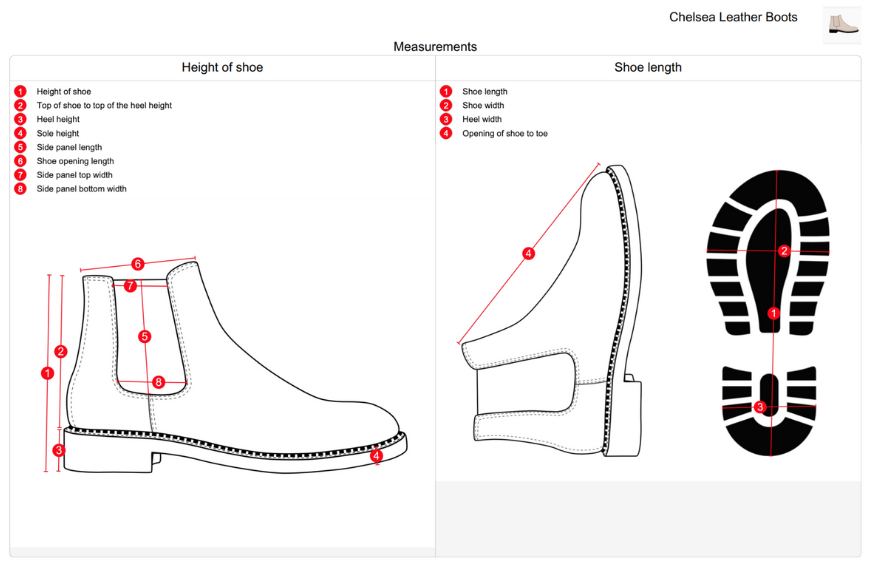
Pro Tip: Overcoming the Language Barrier
Here is a secret from inside the factory. Keep your English text to an absolute minimum. Use bullet points. Use bold red arrows pointing directly to the part of the shoe you are talking about.
If you write a three-sentence paragraph explaining how you want the heel tab to fold, it will get lost in translation. Instead, draw a zoomed-in circle of the heel tab, show the fold line, and write: “Fold 5mm inward and double stitch.” Visual communication is the universal language of manufacturing.
How to Use Our Free 2026 Tech Pack Template
We know that building this from scratch is overwhelming. That is why we took the exact format our sample room uses and turned it into a clean, easy-to-use template for brand founders.
Our 2026 Footwear Tech Pack Template includes:
A pre-formatted Bill of Materials (BOM) Excel sheet.
Design callout pages with placeholder shoe angles.
A colorway and Pantone assignment chart.
A packaging and labeling spec sheet.
You can hand this template to your designer, have them fill in the blanks, and send it straight to us (or any factory). It guarantees you will look like a seasoned professional, and it forces the factory to take your project seriously from day one.
Frequently Asked Questions (FAQ) for Brand Founders
1. What software should I use to create a tech pack?
Adobe Illustrator is the industry standard for drawing the 2D vector lines. For the BOM and text layout, most brands use Excel or Adobe InDesign to combine everything into a single, clean PDF.
2. Do I need to translate my tech pack into Chinese?
No. A professional OEM factory dealing with international clients will have English-speaking merchandisers. However, keeping your English simple, visual, and using standard industry terms makes their translation job much easier.
3. Can I just send a physical shoe to the factory instead of a tech pack?
Yes! Sending a physical “reference shoe” is highly recommended. You can send a shoe and say, “I want this exact shape, but change the upper design to match my tech pack.” This saves a lot of time on Last development.
4. How much does it cost to have a designer make a tech pack?
If you hire a freelance footwear designer on platforms like Upwork or Coroflot, a professional tech pack can cost anywhere from $300 to $1,500 per style, depending on the complexity and whether they are designing the shoe from scratch.
5. What is a BOM?
BOM stands for Bill of Materials. It is a comprehensive list of every raw material, component, and hardware piece needed to manufacture one pair of your shoes.
6. Do I need a separate tech pack for every colorway?
Not necessarily. You can use one master tech pack for the shoe’s construction, and then add a “Colorway Page” at the end that shows the different color combinations and their respective Pantone codes.
7. What if I don’t know the exact material names?
If you are unsure, describe the function and feel. For example: “Needs to be waterproof, matte finish, soft to the touch.” A good factory will suggest the right material (like a specific PU or treated leather) and send you physical swatches to approve.
8. Does the tech pack include the shoe box design?
Yes. Packaging is a crucial part of the manufacturing process. Your tech pack should specify the box dimensions, cardboard thickness, logo placement, and barcode sticker locations.
9. Will a good tech pack lower my sample costs?
Absolutely. Factories charge high sample fees when they have to guess, make mistakes, and remake the shoe three times. A perfect tech pack means they get it right on the first or second try, saving you revision fees and months of waiting.
10. Can Jinhua Shoes help me finish my tech pack if it is incomplete?
Yes. We offer ODM services and design support. If you have a rough sketch and a basic idea, our in-house R&D team can help you flesh out the technical details, select materials, and finalize the BOM before we start sampling.
Conclusion & Actionable Advice
Creating a professional footwear tech pack is not just about making things look pretty. It is about taking control of your supply chain. When you hand a Chinese factory a highly detailed, visually clear tech pack, you immediately establish yourself as a serious buyer. You eliminate the guesswork, protect your brand from cheap material substitutions, and drastically speed up your time to market.
Stop relying on rough sketches and long emails. Treat your shoe design like the engineering project it actually is.
Ready to stop wasting time on bad samples?
Click the link below to request our Free 2026 Footwear Tech Pack Template. If you already have your tech pack ready, email it to our team today. We will review your specifications, provide expert feedback on material choices, and give you an accurate quote within 24 hours. Let’s build your next bestseller together.
📧 Email your designs to: sales@jinhuashoes.com
 EN
EN  DE
DE  FR
FR  ES
ES  IT
IT  SV
SV  NB
NB  NL
NL  PL
PL  PT
PT  CS
CS  FA
FA  AR
AR  TR
TR  RU
RU  EL
EL  JA
JA  ID
ID  KO
KO