
You can design the most beautiful shoe upper in the world, using premium Italian leather or advanced breathable mesh. But if you choose the wrong outsole material, your product will fail. It really is that simple.
For a footwear brand founder or procurement director, the outsole is not just a design element. It is a massive business decision. The material you choose dictates your tooling costs (mold fees), your Minimum Order Quantities (MOQs), your shipping freight weight, and ultimately, your customer return rate.
The global footwear sole market is projected to reach $30.46 billion by 2030. As consumer demands for comfort and durability rise, the days of slapping a cheap piece of plastic on the bottom of a shoe are over. When you talk to a custom shoe soles manufacturer in China, they will throw acronyms at you: EVA, TPR, TPU, PU, Phylon.
If you don’t know the exact cost, performance, and hidden risks of each, you might end up paying for a premium sole on a budget shoe. Or worse, you might face a massive inventory disaster. After 20 years of manufacturing shoes for global brands, we are going to break down the five main outsole materials. We will look at their real manufacturing costs, their technical flaws, and exactly which one you should choose for your next footwear project.
The 2026 Market Reality: Global Shifts in Footwear Sourcing
Before we look at the materials, you need to understand the current B2B landscape. Based on recent 2026 Alibaba B2B sourcing data, buyer behavior is shifting rapidly.
The United States remains the largest single market, accounting for roughly 17.6% of global sole buyers. But the fastest growth is happening elsewhere. Buyer demand from Canada has spiked by over 171%, while Mexico and India are seeing massive double-digit growth.
What does this mean for your brand? It means you need to specify materials based on your target region. A Canadian buyer needs cold-weather rubber compounds that don’t crack in the snow. An Indian or Southeast Asian buyer needs lightweight, breathable EVA that performs well in extreme heat and humidity. You cannot use a “one size fits all” approach to your supply chain anymore.
The “Big Five” Materials: A B2B Breakdown
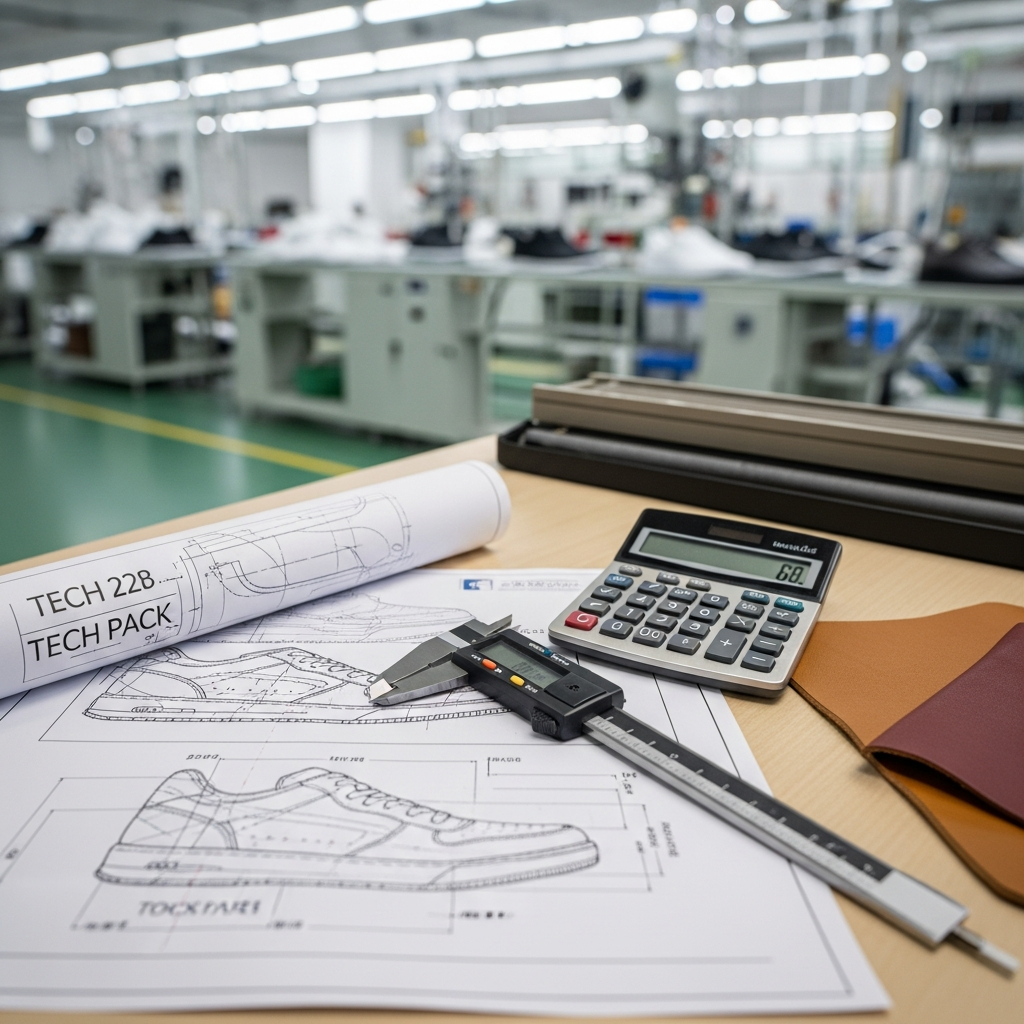
When you are building a tech pack for your factory, you need to select your bottom material carefully. Here is the unfiltered truth about the five most common options.
Sole Material Comparison Matrix (2026 Industry Standards)
| Material | Weight | Cushioning | Durability | Grip/Traction | Flexibility | Cost Level | Best Applications |
|---|---|---|---|---|---|---|---|
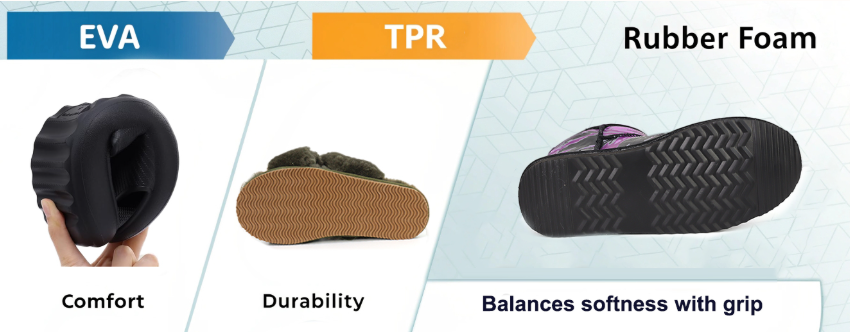
| EVA (Ethylene Vinyl Acetate) | Lightest | Excellent | Moderate (compresses over time) | Fair | Very Good | Low-Medium | Running shoes, casual sneakers, sandals, children’s footwear |
| TPR (Thermoplastic Rubber) | Medium | Good | Good | Excellent | Excellent | Low | Work boots, casual shoes, affordable fashion footwear |
| PU (Polyurethane) | Medium-Heavy | Very Good (dense) | Excellent (longest-lasting) | Good | Moderate | Medium-High | Premium casual shoes, dress shoes, hiking boots |
| Rubber (Natural/Synthetic) | Heavy | Fair | Excellent | Best-in-class | Moderate | Medium | Work boots, outdoor shoes, safety footwear, winter boots |
| TPU (Thermoplastic Polyurethane) | Medium | Good | Very Good | Very Good | Good | Medium-High | Performance athletic shoes, football boots, high-end trainers |
1. EVA & Phylon: The Lightweight Kings
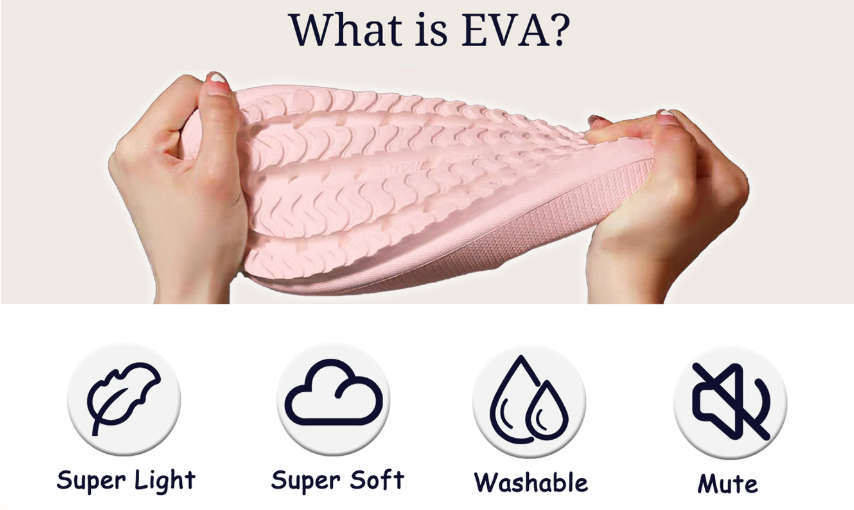
If you pick up a modern running shoe or a thick-soled lifestyle sneaker and are shocked by how light it is, you are holding an EVA (Ethylene-Vinyl Acetate) sole. It is essentially a dense foam created by expanding plastic with gas.
In the factory, we work with two types. Standard injected EVA is cheaper and used in basic sandals. Phylon is compressed and injected EVA. The compression makes Phylon firmer, more responsive, and better at holding its shape. Sports brands charge a premium for Phylon.
The B2B Advantage: Weight reduction. Lighter shoes mean significantly lower air and sea freight costs when shipping bulk orders from China. It also provides unmatched immediate comfort for the wearer.
The Hidden Flaw: EVA suffers from compression set. After a few months of heavy wear, the foam cells collapse, and the sole loses its bounce. It also has poor abrasion resistance on rough concrete.
Best For: Running shoe midsoles, casual sneakers, recovery sandals, and budget-friendly daily wear.
2. TPR (Thermoplastic Rubber): The Value Champion
TPR is the workhorse of the mid-tier footwear industry. It is a synthetic material that acts like rubber but is processed like plastic. This means we can melt it down and inject it into molds very quickly.
The B2B Advantage: TPR offers an incredible balance of cost and performance. It is highly flexible, provides decent slip resistance, and the mold fees are generally lower than those for pure rubber or Phylon. It is the go-to material for brands that need to hit a strict retail price point without selling garbage.
The Hidden Flaw: It is heavier than EVA. If you put a thick TPR sole on a sneaker, the shoe will feel clunky. Also, cheap TPR compounds can become stiff in freezing temperatures.
Best For: School shoes, affordable casual sneakers, everyday loafers, and entry-level winter boots.
3. Rubber: The Heavy-Duty Gold Standard
When we talk about rubber, we mean vulcanized or natural/synthetic blended rubber. This is the traditional material used in classic skate shoes and heavy-duty work boots.
The B2B Advantage: Nothing beats rubber for durability and grip. It has the highest abrasion resistance of any standard sole material. If your customers work in restaurants or construction sites, they need rubber. It easily passes strict occupational safety standards (like SRC slip-resistance ratings).
The Hidden Flaw: Rubber is heavy. It is also expensive to process. The vulcanization process (baking the rubber to cure it) takes time and energy. The steel molds required for rubber are also very expensive.
Best For: Safety boots, premium hiking shoes, skate shoes, and high-end cupsole sneakers.
4. PU (Polyurethane): The Longevity Champion (With a Catch)
PU is a dense, poured foam. It feels firmer underfoot than EVA, but it holds its shape incredibly well. It is widely used in premium dress shoes and high-end casual footwear.
The B2B Advantage: Long-term structural integrity. While EVA flattens out over time, PU keeps its shape for years of daily wear. It offers excellent abrasion resistance.
The Hidden Flaw: Hydrolysis. This is a massive inventory risk that many factories won’t tell you about. PU is susceptible to chemical degradation from moisture in the air. If you manufacture 10,000 pairs of PU-soled shoes and leave them sitting in a humid warehouse for two or three years, the midsoles will literally crumble into dust. You must have a fast inventory turnover rate if you use PU.
Best For: Premium formal shoes, high-end casuals, and specific work boots (where inventory moves quickly).
5. TPU (Thermoplastic Polyurethane): The Premium Performer
TPU is the luxury sports car of outsole materials. It is an advanced polymer that bridges the gap between rubber and plastic.
The B2B Advantage: TPU is incredibly tough. It has extreme abrasion resistance but can be molded much thinner than rubber. This gives you a highly durable sole that is relatively lightweight. Also, TPU can be made completely transparent, allowing designers to put logos under the sole.
The Hidden Flaw: It is very stiff and very expensive. You cannot use a solid block of TPU for a whole sole, or the shoe won’t bend. It is usually used as a thin bottom traction layer or as structural support plates.
Best For: Soccer cleats, high-performance athletic shoes, and luxury designer footwear.
The Hybrid Strategy: Maximizing ROI with Multi-Material Soles
Here is a secret that top footwear brands use to maximize their profit margins while keeping quality high: they don’t use just one material.
If you want the lightweight comfort of EVA but the durability and grip of Rubber, you combine them. We do this by molding a thick EVA (or Phylon) midsole for shock absorption, and then gluing thin “Rubber Pods” only on the high-wear areas (the heel strike zone and the toe off zone).
This hybrid approach gives your customer a premium, lightweight, durable shoe. Yes, it requires two sets of molds (one for the EVA, one for the Rubber), which increases your initial tooling investment. But it allows you to position your shoe in the $100+ retail category, easily covering the upfront costs. This EVA + Rubber combination is the absolute industry standard for modern running and gym shoes.
Tooling Costs & MOQ: A Manufacturer’s Honest Breakdown
When you contact a factory in China for custom shoe manufacturing, the first shock is usually the mold fees. Every single shoe size requires its own physical metal mold. If your size run is US 7 to US 13 (including half sizes), that is 13 different molds.
Here is a rough B2B guide to what you can expect for tooling costs:
TPR Molds: Usually the cheapest. Around $300 to $500 per size. Great for testing a new market.
Rubber Molds: More expensive due to the heavy steel required for vulcanization. Around $600 to $900 per size.
EVA (Phylon) Molds: Expensive because they require precision 3D CNC machining. Can range from $800 to $1,200+ per size.
Dual-Density (e.g., EVA + Rubber): You are paying for two sets of molds. This is a serious investment, usually reserved for established brands with proven sales channels.
What about MOQs (Minimum Order Quantities)?
If you want a 100% custom sole with your brand logo embossed on the bottom, you have to pay for new molds. Factories usually require an MOQ of 1,000 to 2,000 pairs to make the machine setup time efficient.
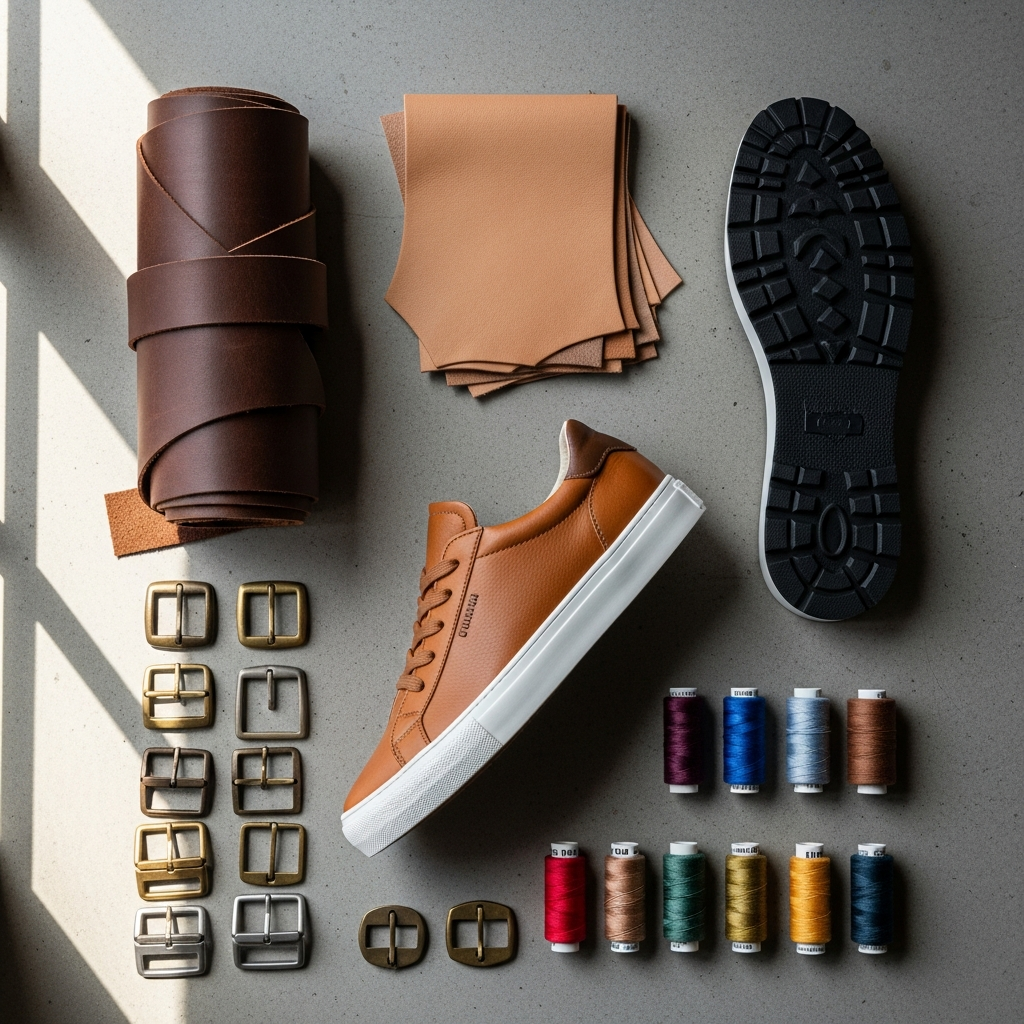
However, if you want to save money, you can use an “Open Mold.” Large factories have thousands of existing sole designs. You can choose a sole that fits your aesthetic, and we will attach your custom upper to it. You save thousands of dollars in mold fees and can often start with an MOQ as low as 300 to 500 pairs.
Frequently Asked Questions (FAQ) for B2B Buyers
1. Which is better for a startup brand: EVA or TPR?
If you are launching a casual sneaker or school shoe on a tight budget, TPR is safer. The mold costs are lower, and the durability is excellent. If you are launching an athletic or comfort-focused brand, you must use EVA, but be prepared for higher tooling costs.
2. How do I prevent PU soles from crumbling (Hydrolysis)?
You cannot stop hydrolysis entirely, but you can slow it down. Store your inventory in a climate-controlled, dry environment. More importantly, manage your supply chain so that PU shoes are sold and worn within 12 to 18 months of manufacturing. Wearing the shoes actually presses the moisture out of the foam, extending their life.
3. Can I put my brand logo on the bottom of the outsole?
Yes. But this requires opening a custom mold. You cannot simply stamp a logo onto an existing, pre-made open mold. You will need to pay the tooling fees for your specific size run.
4. Which outsole material is best for the Indian or Southeast Asian market?
Because of the extreme heat and humidity, EVA is highly recommended for daily wear. It stays lightweight and breathable. However, for the monsoon season, a pure EVA sole is too slippery. The best configuration for these regions is an EVA midsole with a Rubber outsole for grip.
5. Why do some clear TPU or Rubber soles turn yellow over time?
This is called oxidation. It is caused by exposure to UV light (sunlight) and oxygen. While premium factories add anti-yellowing chemicals to clear soles during manufacturing, all transparent polymers will eventually yellow slightly over a few years.
6. Is there an eco-friendly alternative to these synthetic soles?
Yes. The industry is shifting fast. We now offer recycled rubber (made from factory scraps), bio-based EVA (made from sugarcane instead of petroleum), and TPR mixed with natural fibers. These are great for brands targeting the sustainable ESG market.
7. What is a “Cupsole”?
A cupsole is a rubber outsole that has tall sidewalls, creating a “cup” that the shoe upper sits inside. It is then stitched and glued to the upper. It is highly durable and very common in skate shoes and premium casual sneakers.
8. Why does my factory charge more for a two-color rubber sole?
A two-color sole requires workers to manually place different colored rubber strips into specific parts of the mold before baking. It is a slower, labor-intensive process compared to injecting a single solid color.
9. Can TPR be used for athletic running shoes?
We strongly advise against it. TPR is too heavy and does not provide the energy return (bounce) needed for running. For athletic shoes, you should always use compression-molded EVA (Phylon) or advanced supercritical foams.
10. How long does it take to open a new set of custom sole molds?
Once you approve the 3D CAD drawings and wooden mock-ups, it typically takes 20 to 30 days for the mold factory to cut the steel or aluminum molds for a full size run.
Conclusion & Actionable Advice
Choosing the right outsole is a delicate balancing act between performance, aesthetics, and your target profit margin.
If you are launching a budget-friendly fashion line, TPR is your best friend. If you are building a premium athletic brand, you need to invest in Phylon tooling. If you are making heritage workwear, nothing replaces the rugged durability of real rubber. And if you choose PU, you must keep a close eye on your inventory turnover to avoid hydrolysis.
The biggest mistake new brands make is designing a shoe without considering the sole’s tooling cost and material limitations. Before you finalize your tech pack, you need to have a frank conversation with your manufacturer about your budget, your target retail price, and the climate of your target market.
Stop guessing which material is right for your brand. If you want to avoid costly tooling mistakes and find the perfect sole for your next collection, we are here to help.
– Send us your design sketches, and we will provide a free material consultation, a tooling cost estimate, and access to our catalog of thousands of open molds to help you save money and launch faster.
 EN
EN  DE
DE  FR
FR  ES
ES  IT
IT  SV
SV  NB
NB  NL
NL  PL
PL  PT
PT  CS
CS  FA
FA  AR
AR  TR
TR  RU
RU  EL
EL  JA
JA  ID
ID  KO
KO